

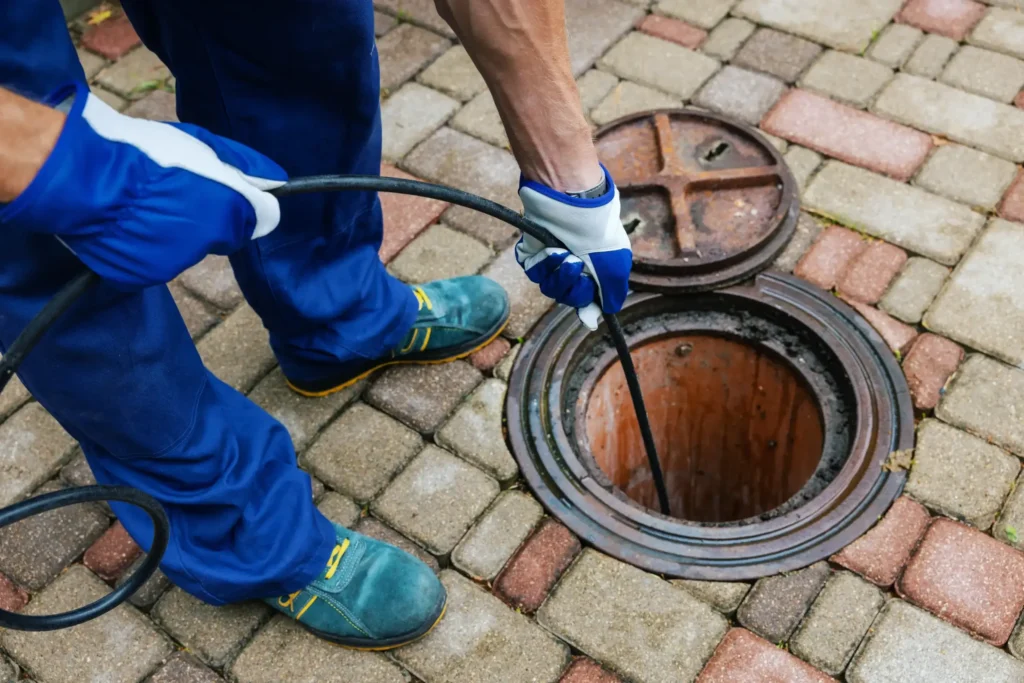
Pipe relining is a trenchless repair method that fixes damaged, cracked, or root-affected pipes from the inside, without excavating your property. The process runs a resin-saturated liner into the damaged pipe under pressure. It moulds to the interior wall as it cures, forming a new structural layer inside the original pipe. The driveway stays untouched. So does the garden. Most residential jobs across Brisbane and South East Queensland are finished within a day.
What matters more than the basics is knowing when pipe relining is actually the right call, and what separates a properly scoped job from one that surfaces a different problem six months later.
Key Takeaways
- Pipe relining creates a new structural pipe inside the existing damaged one using a cured-in-place resin liner, which is known as CIPP lining
- It eliminates excavation in most cases: no broken driveways, no destroyed gardens, no heavy machinery on site
- The repair suits cracked, leaking, root-affected, or corroded pipes that retain enough structural integrity to support a liner
- Completely collapsed pipe sections may require targeted excavation before relining can proceed
- Compliant installations must meet AS/NZS 3500 standards and use WaterMark-certified materials
- A CCTV drain camera inspection is required before any relining quote; no camera, no accurate scope
How Does Pipe Relining Work?
The liner goes in flexible and comes out structural. Air pressure drives the resin-impregnated liner into the pipe. As the inversion drum feeds it through, the outer resin face presses against the pipe wall and holds position under continuous pressure while the epoxy sets. After curing, that liner carries its own load. The host pipe around it becomes largely incidental to how the drainage system performs.
Method changes depending on pipe length, access conditions, and what the CCTV inspection finds. But the sequence is consistent.
CCTV inspection
A pan-and-tilt drain camera goes into the pipe to locate the damage, hairline fractures at clay junctions, root intrusion through old earthenware, and joint displacement in PVC lines under driveways. Without camera confirmation, there’s no reliable scope. This step also determines whether relining is viable or whether partial excavation is needed first.
High-pressure jetting
Before any liner goes in, the pipe interior is cleared using a 4000 PSI water jetter at 72 L/min. Root mass, grease build-up, and debris have to come out completely. If residue remains on the pipe wall, the resin won’t bond properly. An uneven bond leads to linear movement and reduced flow capacity, a preventable failure that typically shows up months later.
Liner preparation and insertion
The liner, fibreglass or polyester fabric, depending on the system, is cut to length and saturated with two-part epoxy resin. It’s inserted using either an inversion drum for longer continuous runs or a sectional pull-in method for isolated damage. Brawoliner systems, which use air pressure inversion, handle the bends and junctions common in older Brisbane drainage layouts well.
Curing
The liner is inflated against the pipe wall and held under pressure while the resin cures. Depending on the system and pipe diameter, this takes a few hours. Some jobs use hot water circulation to accelerate setting; others use UV light curing. Both produce the same result, a hardened internal layer bonded to the host pipe.
Reinstatement and final inspection
Pipe junctions sealed during the lining process are reopened using a robotic cutter, typically a Picote-style tool operated via CCTV camera from above ground. A second camera run confirms full curing, correct liner position, and restored flow. That footage stays on the job record.
What Is CIPP Lining, and Is It the Same as Pipe Relining?
CIPP stands for Cured-In-Place Pipe, the technical classification for the installation method behind pipe relining. The two terms aren’t identical. Pipe relining is a repair service. CIPP lining is the specific process of curing a resin-saturated liner inside the host pipe until it forms an independent internal layer. Contractors and homeowners frequently use both to mean the same thing, which works in general conversation. Reading a scope of work, the difference is worth understanding.
A correctly installed CIPP liner carries a 50-year manufacturer’s warranty on most qualifying residential jobs across SEQ. The earthenware or PVC surrounding it continues to age, but the liner doesn’t depend on that pipe for anything. It’s load-bearing on its own terms. What that means practically for a pre-1980s Brisbane property with deteriorating clay sewer lines is that a properly executed reline extends functional life well beyond what the original pipe could deliver.
Under the Queensland Plumbing and Drainage Act 2018 and AS/NZS 3500, any CIPP liner installed in Queensland must carry WaterMark certification. The resin and liner also need to be approved as a tested system, sourced and verified together, not mixed from different manufacturers on-site. Mismatched systems are one of the more consistent causes of premature liner failure, and a failed installation voids the warranty.
When Is Pipe Relining the Right Call?
The critical factor is whether the pipe still holds its circular profile. Cracked joints and root intrusion through earthenware gaps are conditions that pipe relining handles well, provided the surrounding pipe geometry is roughly intact. Full structural collapse is a different situation. The camera footage will show that before any scope is written.
Common scenarios across SEQ where relining is the right approach:
- Pre-1980s Brisbane suburbs like Paddington, Toowong, Annerley, and Wynnum still run original earthenware sewer lines. Fractures and joint failure in the clay pipe are standard findings on a camera run through these areas.
- Inner Brisbane streets are lined with mature jacarandas and figs. Root systems find junction gaps in old clay pipe reliably, a jetter can clear without relining, and typically buys 6 to 12 months before they’re back.
- Hairline fractures in PVC lines running under established driveways or concrete slabs
- Corroded sections in older cast iron or concrete drainage on commercial sites
- Joint displacement from reactive clay soil movement, a pattern that comes up repeatedly across Logan and Ipswich
Where relining won’t work on its own: a fully collapsed pipe section has lost its circular shape, which means there’s no internal geometry for a liner to conform to. In those situations, a targeted excavation to replace the collapsed section is typically followed by relining the accessible pipe on either side.
The honest position: CCTV inspection determines this, not a visual assessment from above ground. Any contractor quoting a reline without camera evidence of pipe condition is guessing.
Pipe Relining vs Traditional Excavation: The Trade-Off
The comparison isn’t simply “cheaper vs more expensive.” It depends on what the job involves.
Traditional excavation makes sense when pipes are fully collapsed, or when the access point is already open for another reason, a renovation, a yard dig, or a new build stage. In those situations, relining may not offer a meaningful practical advantage.
For most established residential and commercial properties across South East Queensland, the trade-off looks different. Excavating a cracked sewer line under a concrete driveway involves cutting the slab, digging to pipe depth, replacing the affected section, backfilling, compacting, and reinstating the surface. That’s machine hire, days of disruption, and significant reinstatement cost on top of the drainage work itself.
A pipe relining job on the same section, assuming the pipe structure supports it, is a single call-out with no surface damage.
The warranty is also worth understanding clearly. Properly installed CIPP systems using WaterMark-certified materials carry manufacturer warranties of up to 50 years. Brawoliner systems are tested to that lifespan under normal operating conditions. That’s not a marketing approximation.
One point that comes up regularly: does the liner reduce flow? Yes, the liner reduces internal pipe diameter slightly, typically a few millimetres depending on liner thickness. On domestic drain lines, this has no meaningful effect on flow performance. A clean-walled, relined pipe usually flows better than the original deteriorated pipe carrying years of root intrusion and mineral scale.
What Are the Limits of Pipe Relining?
Not every damaged pipe is a candidate, and overstating the scope of what relining can fix creates bigger problems later.
A completely collapsed section, where the pipe has lost its circular form, can’t be lined without first reinstating shape through targeted excavation. Very severe internal deformation or large open gaps in old earthenware may also fall outside relining tolerances, depending on the extent of damage the camera reveals.
Diameter matters too. Most residential relining work operates on 100mm to 225mm lines. Large-diameter commercial or stormwater infrastructure involves different liner systems and different site logistics.
Poor installation is the other real risk. If the pipe isn’t adequately cleaned before the liner goes in, the resin bond fails. If the calibration pressure is inconsistent during inversion, the liner can wrinkle, reducing flow capacity and introducing new failure points that weren’t there before. This is precisely why the licensing requirement under the Queensland Plumbing and Drainage Act 2018 exists. Pipe relining must be carried out by a QBCC-licensed drainage contractor. Licence details are verifiable on the QBCC public register. Check before any work starts.
How Much Does Pipe Relining Cost in Brisbane?
What drives pipe relining cost on a residential job is mainly pipe length and the amount of pre-reline preparation required. That means the volume of root mass, scale, or debris the jetter has to clear before the liner can go in. Pipe diameter and the number of junctions that need reinstating after curing also affect the scope. Access conditions on older SEQ properties can add to the complexity.
For residential trenchless pipe repair across Brisbane and South East Queensland, approximate pricing looks like this:
Sectional repairs on an isolated damage point typically start from $500–$900 per metre, depending on access conditions and pipe condition. A full sewer reline across a longer continuous run varies by job complexity and will be scoped from the CCTV inspection footage.
The comparison point that matters isn’t pipe relining vs doing nothing. It’s pipe relining vs excavation and full reinstatement. On a driveway, that means concrete cutting, machine hire, backfill, compaction, and resurfacing, all on top of the pipe replacement cost itself.
For property managers across Logan and Ipswich handling multiple tenancies, or homeowners preparing for settlement on a property with older drainage, that cost calculation usually favours relining, particularly on lines under established surfaces.
Ready to Get Your Pipes Assessed?
If you’re dealing with a recurring blockage, slow drainage, root intrusion, or a cracked line under an established surface, the first step is a camera inspection. We run CCTV assessments across Brisbane, Logan, Ipswich, and the Gold Coast, QBCC licence 15406825, 25+ years operating across SEQ, $20 million public liability cover.
We won’t quote a reline without footage confirming what’s actually in the pipe.
Book a CCTV drain inspection or talk to our team about a pipe relining quote. Call us directly or fill in the contact form, and we’ll get back to you the same day.
Frequently Asked Questions
The process uses air pressure to drive a resin-saturated liner into the damaged pipe. It inverts as it travels through, pressing the resin face against the pipe wall. After curing, that liner carries its own structural load. No excavation required.
For most root intrusion jobs, yes. The liner seals the junction gap or hairline crack that the roots came through, and the cured resin surface doesn't give them a new entry point. The exception is when root mass has caused the pipe to collapse. A CCTV inspection determines that, before any relining work is scoped.
Manufacturer warranties on WaterMark-certified CIPP systems run to 50 years on qualifying installations. Whether the liner reaches that lifespan depends heavily on two things: the quality of the resin system used and the condition of the host pipe at the time of installation. A pipe that was already significantly compromised before the liner went in will produce a shorter service life, regardless of the warranty term on the materials.
Pipe relining needs an internal structure to work against. A fully collapsed section has lost its circular profile and can't hold a liner in position during curing. That section typically needs to be excavated and replaced first. Relining then applies to the accessible pipe running on either side of the repair.
Yes, and there's a practical reason for it. The camera run establishes pipe condition and junction positions before anything gets scoped. Liner length, access points, and whether relining is even viable at that section all come from the footage. Quoting without a camera run means quoting blind, and we don't do that.
Pipe relining in Queensland falls under the Queensland Plumbing and Drainage Act 2018 and requires a QBCC-licensed drainage contractor to carry out the work. The QBCC public register lets anyone verify a licence number before a job starts. On materials, AS/NZS 3500 compliance requires WaterMark certification, and the resin and liner need to be tested and approved as a combined system by the manufacturer. Using components sourced separately from different suppliers is a warranty and compliance risk.
Sectional repair targets a specific isolated section, a single cracked joint, a root entry point, or a small area of joint displacement. Full relining covers a longer continuous run. Which method applies depends entirely on what the CCTV inspection shows.
The liner does reduce the internal pipe diameter slightly. On a standard residential drain line, that reduction has no meaningful effect on flow. In practice, a freshly relined pipe typically outperforms the original; a deteriorated earthenware or PVC line carrying years of scale and root intrusion moves water more slowly than a clean cured resin surface does.